
What is a cube sheet? How movers size a move in cubic feet
What a cube sheet is, how cubic feet turn into truck, crew and weight, a worked example with real values, and the mistakes that throw a total off.
By the MoveVision team4 min read
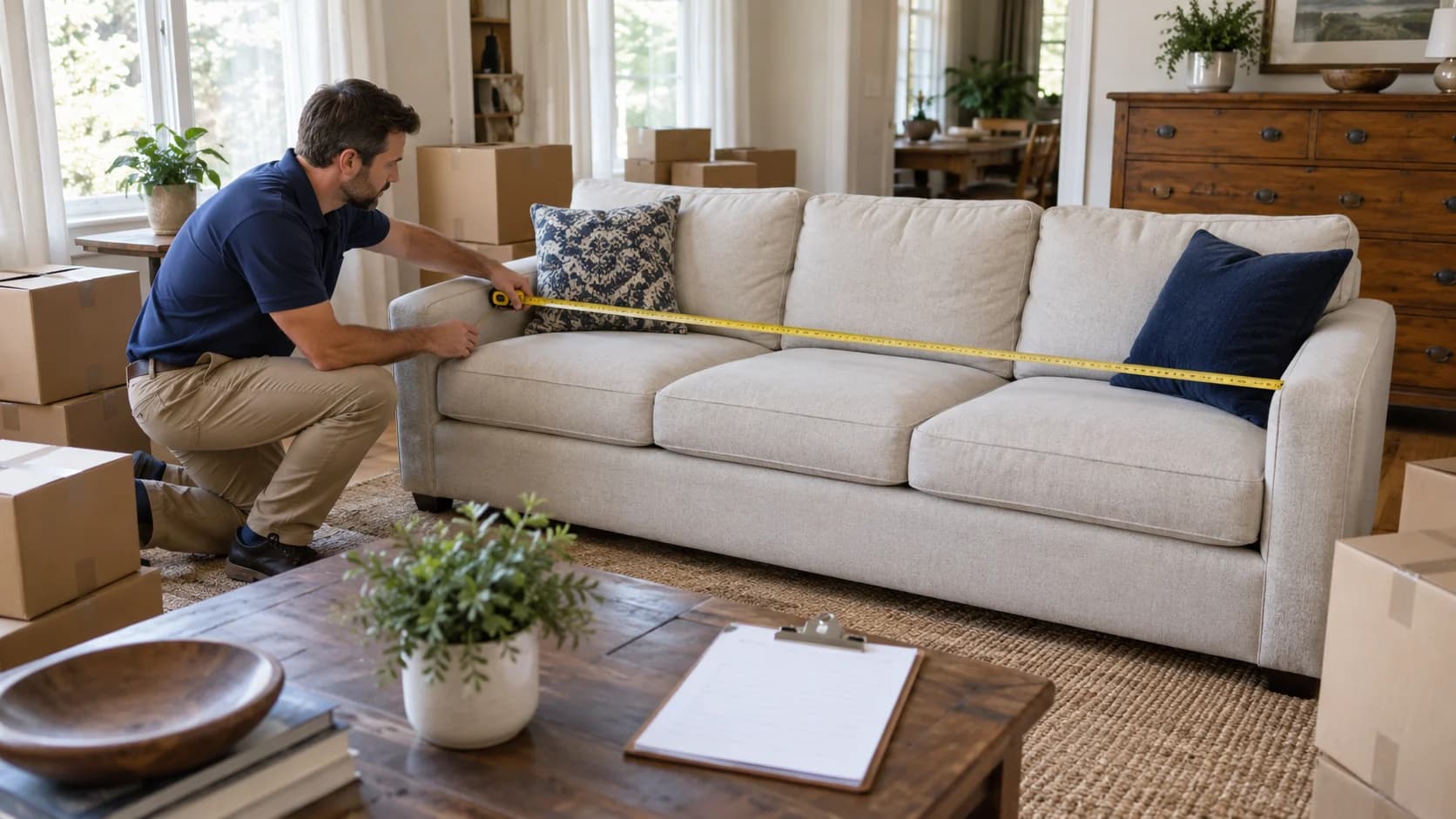
What a cube sheet is
A cube sheet is a list of household items with a volume, in cubic feet, for each one. A sofa, a queen bed, a double dresser and a medium carton all have a number. Add up the numbers for everything that is moving and you have the size of the move.
Movers need a shared way to turn “a three-bedroom house” into something they can plan around, and the cube sheet is it. Many companies keep their own version, adjusted for the kind of work they do.
From cubic feet to truck, crew and hours
The total is not the quote, but nearly every part of the quote starts there. Volume decides which truck the move needs, or how many trips. It also drives labor: how long loading and unloading take depends on how much there is to carry and how much of it is heavy or awkward, and your experience with your own crews fills in the rest.
That is why a few cubic feet either way is more than arithmetic. A truck that is too small means a second trip or a half load left behind on move day. A truck that is too big means you quoted for capacity you did not need. Either way, somebody is unhappy with the bill.
Why a list of names isn’t enough
“Sofa, two armchairs, dining table, six chairs” sounds like an inventory. It is a list of names, because none of those words has a size. A loveseat and a large sectional are both sofas. In MoveVision’s cube table a 2-cushion loveseat is 35 cu ft and a sectional of three or more pieces is 130.
The same goes for every category: a twin bed and a king, a small bookcase and a wall unit, a small television and a 70-inch one. The name tells you what the item is. The size is what you plan with, so every line needs both.
Sizing variants
A good cube sheet gives each item several variants, and the right one depends on what the item is as well as how big it is. A sleeper sofa is no wider than a regular 3-cushion sofa, but it has a bed folded inside it, so it takes up more room on the truck and weighs a good deal more.
When nobody says which variant an item is, the sheet needs a sensible default, and the estimator needs to know a guess was made. A silent default is how a king bed ends up priced as a twin. In MoveVision, items the AI is unsure about are flagged for a person to answer.
Getting weight from volume
Cubic feet also gives you a first estimate of weight. MoveVision’s default is 7 lb per cu ft, a household average. Items that are much denser override it: refrigerators are set at 12 lb per cu ft, small safes at 22 and gun or large safes at 30. A sleeper sofa is 10.
It is an estimate, not a scale reading, and your estimator can edit the weight on any line. Its job is to show when a move has more heavy pieces than its volume suggests, because weight changes the crew you send.
How to calculate cubic feet for a move
The method is three steps. List every item that is moving, room by room, and leave out what is staying. Look up the cubic feet for the size of each item. Multiply by the count where there is more than one, then add everything up. Do the same for cartons, by size, once you know how many there are.
You do not need a tape measure. Companies keep their own versions, so agree on one sheet and everyone starts from the same numbers.
A worked example
Here is a small slice of a move, sized with the values in MoveVision’s built-in cube table: a sofa from the living room, two pieces from a bedroom and a dozen medium cartons.
Sofa
3-cushion
50
Bed
Queen
65
Dresser
Double (6-drawer)
35
Medium cartons
12 at 3 cu ft
36
At the default weight, 186 cu ft comes to about 1,302 lb. Now swap the 3-cushion sofa for a sleeper sofa. It is 70 cu ft instead of 50, and at 10 lb per cu ft it weighs about 700 lb, against about 350 lb for the 3-cushion sofa. Same width, same spot in the living room, very different load.
Common pitfalls
Most bad totals come from the same handful of places.
- Boxes. Cartons add up faster than furniture does. In the table, a book box is 1.5 cu ft, a medium carton 3, a large carton 4.5 and a dish pack 5.2. How many boxes a home will need is usually a guess until they are packed. MoveVision counts and prices the cartons that appear in the video.
- Items that stay. A cube sheet counts what you list, so a sofa the customer is keeping still adds 50 cu ft if it is left in. Every item needs a plan: moving, staying, storing, donating. MoveVision keeps moving volume and haul-away volume as separate totals.
- Disassembly. Beds, dining tables and desks usually come apart. Flag the item so the crew allots tools and time. MoveVision has a disassemble flag, along with fragile, heavy, crate and two-person.
- Hidden storage. Garages, attics, closets and drawers are where totals drift. Anything the survey never shows is not in the cube.
Where MoveVision fits
MoveVision matches each item in a customer’s walkthrough video to a built-in cube table of 75 items, 28 of them in more than one size, so the draft inventory comes out in cubic feet. The table is built in, and your estimator can override the size on any line. Cube sheet inventory shows how that looks, and how it works walks through the whole survey. You can start a free trial.
Once a draft exists, the question becomes how far to trust it. We wrote about that in AI moving inventory: what the model drafts and what your estimator decides.