In-home, video call or self-recorded video: choosing how to survey a move
Three ways to survey a move, compared on scheduling, what can go wrong and what your estimator is left with, plus the moves that still deserve a visit.
By the MoveVision team5 min read
Why the survey method matters
Every quote starts with the same question: how much is moving? The survey is how you answer it. Whether you visit or run a virtual moving survey, the method you pick changes who has to be where, what your estimator ends up looking at, and which mistakes are most likely.
There are three common ways to do it. Each one works. Each one also tends to produce its own kind of error, and knowing which helps you decide where your estimator’s time is best spent.
In-home surveys
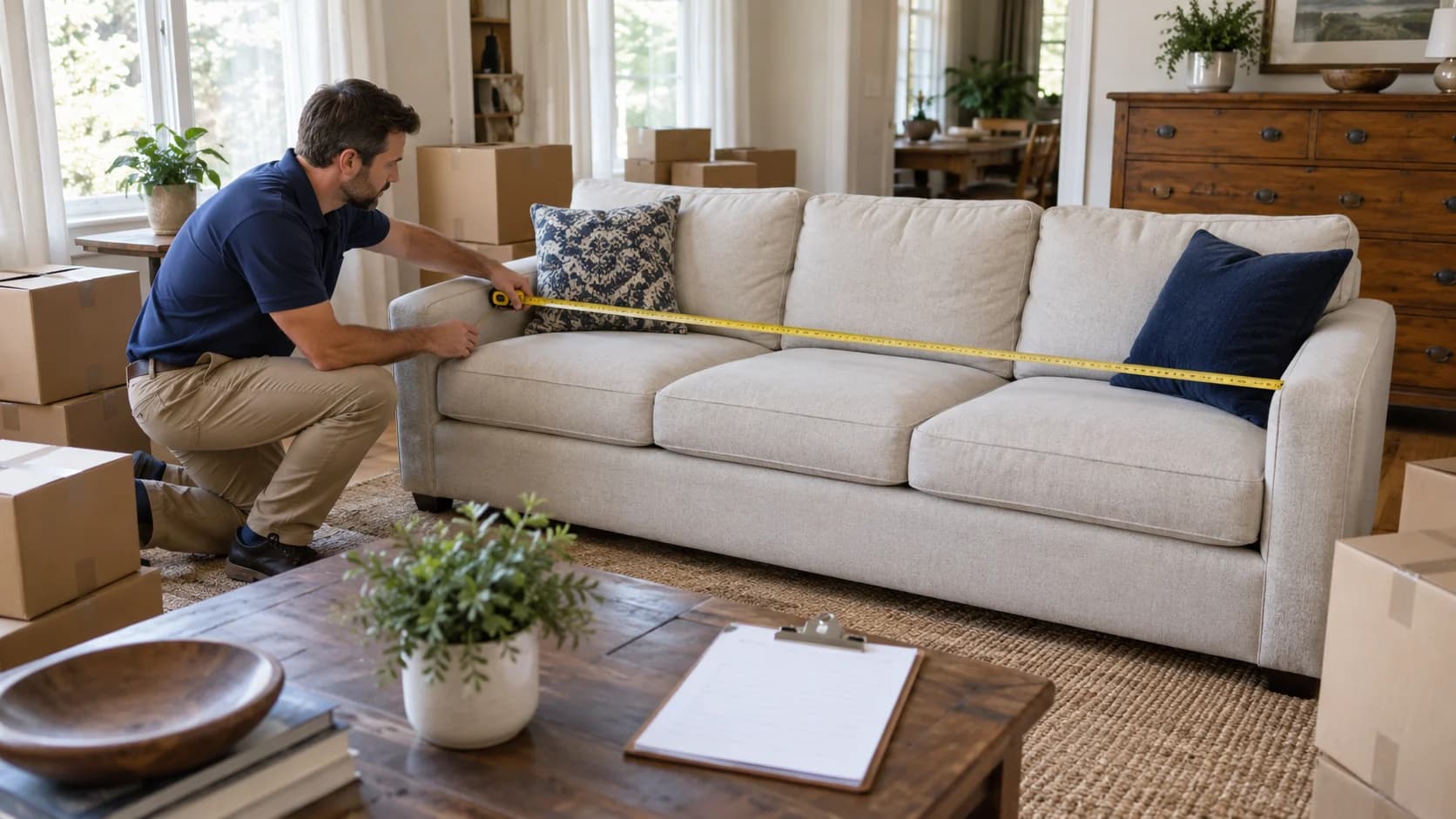
An estimator drives to the home, walks every room with the customer and counts what is moving. It is still the most complete way to see a home, because the estimator can open a closet, lift a rug, check the stairs and see how close the truck can park.
The cost is time and coordination. Someone has to drive there and back, the customer has to be home at an agreed hour, and the estimator can only be in one house at a time. When a customer is comparing quotes, a visit that takes a week to schedule can lose the job before it starts.
The accuracy risk is quieter. Counting happens in real time, in conversation, usually onto a clipboard or a phone. Items get missed when the customer is talking, when a room is crowded, or when the list is finished later from memory. Nothing the estimator saw is kept, so if a line is questioned on move day there is nothing to look back at.
Live video call surveys
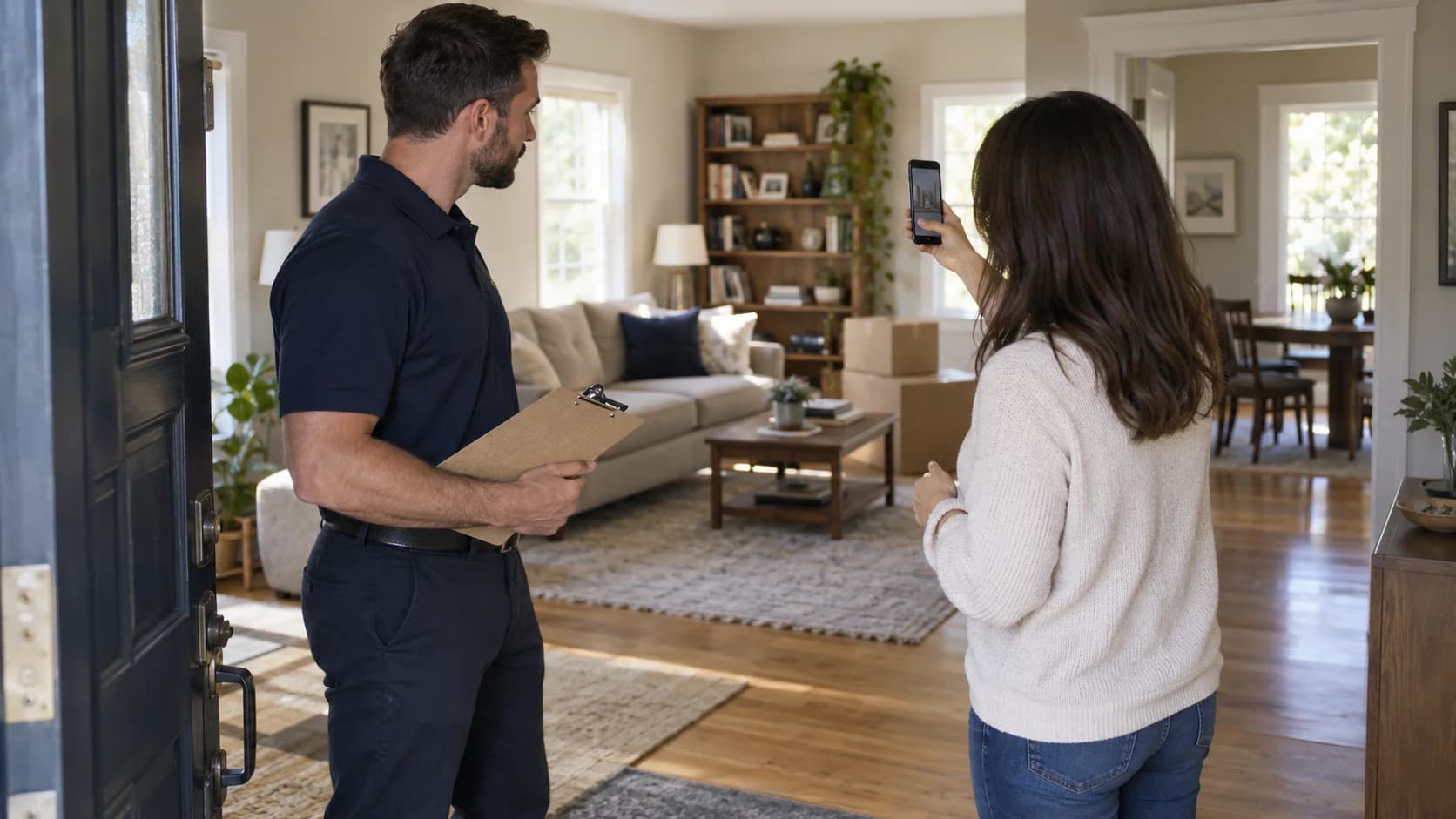
In a live call the estimator joins the customer on video while the customer carries a phone through the home. You skip the drive, and you keep the part of a visit that matters most: the estimator can ask for the closet to be opened or the camera pointed at the ceiling in the moment.
The tradeoffs are scheduling and effort. Both people still need to be free at the same time, so the calendar problem is smaller than a visit but not gone. The customer is holding a phone, walking, talking and answering questions all at once, and the estimator is counting, typing and directing at the same time. Rooms get skipped when the conversation moves on, and a weak signal in a basement can cut off the part you most wanted to see.
What your estimator ends up with depends on whether the call was recorded and how carefully the notes were taken. Often it is a list typed during the call.
Self-recorded video surveys
Here the customer records the home on their own, at a time that suits them, and the estimator reviews the footage later. Nobody has to be on a call, so the customer can film on a Sunday evening and the estimator can review on Monday morning.
Two risks come with that. The first is coverage: with nobody directing, a customer may forget the garage, skip a closet, or film a room so fast that a shelf is a blur. The second is what goes unsaid: a customer who never mentions that the piano is staying leaves the estimator guessing. Clear guidance on screen and a narrated walkthrough reduce both.
The upside is what your estimator is left with. A recording can be paused, rewatched and checked against the inventory at their own desk, and it is still there if a question comes up later. The customer’s effort is one walk through the house with a phone, and nothing to install if the link opens in the phone’s browser.
What your estimator ends up with
Set the three side by side and the biggest difference is the record. After a visit, you have the estimator’s notes and memory. After a live call you have notes, and a recording only if someone thought to start one. After a self-recorded survey you have the footage itself, plus whatever the customer said while filming.
That matters most when a question comes up later. Whether the freezer in the garage was on the list is easier to settle with a clip than with a clipboard. It also changes the estimator’s day: a recording can be reviewed in the gaps between other jobs, in any order, by more than one person, while a visit or a call has to be done in the moment.
A quick way to choose
These are rules of thumb, not a formula. Your own mix of customers matters more than any general advice.
- A standard local move with a customer who is comfortable with a phone: self-recorded video usually gives your estimator what they need with the least scheduling.
- A customer who wants a person talking them through it, or a home where you need to see one specific thing: a live video call.
- A large, complex or unusual move: a visit in person.
When an in-home visit is still the right call
Some moves are better seen in person. A large home with several storage areas, a property with a long or steep route from door to truck, a piano on a staircase, a house full of pieces that need custom crating, a customer who is not comfortable filming: in each case, an hour of your estimator’s time costs less than a wrong quote.
Video shows a staircase, and whether the truck fits on the street is a question for your estimator. Floors, elevator, parking and access notes are things your estimator records for each stop whether the survey is on video or in person, and sometimes the right answer is to ask the customer or drive past. A sensible company uses video for the bulk of its estimates and keeps visits for the moves that justify them.
Where MoveVision fits
MoveVision does the self-recorded kind. Your customer opens a link with your company’s name and logo in their phone’s browser, with no app and no account, and films one room at a time while saying what is moving and what is staying. MoveVision drafts a room-by-room inventory from the video, every line linked to the moment where the item appears, and your estimator reviews it and builds the quote. Virtual moving estimates covers what that looks like from the office.
MoveVision emails the survey link for you, or you copy it and send it your own way. You can start a free trial. If you want to know how far to trust a drafted inventory, read AI moving inventory: what the model drafts and what your estimator decides.